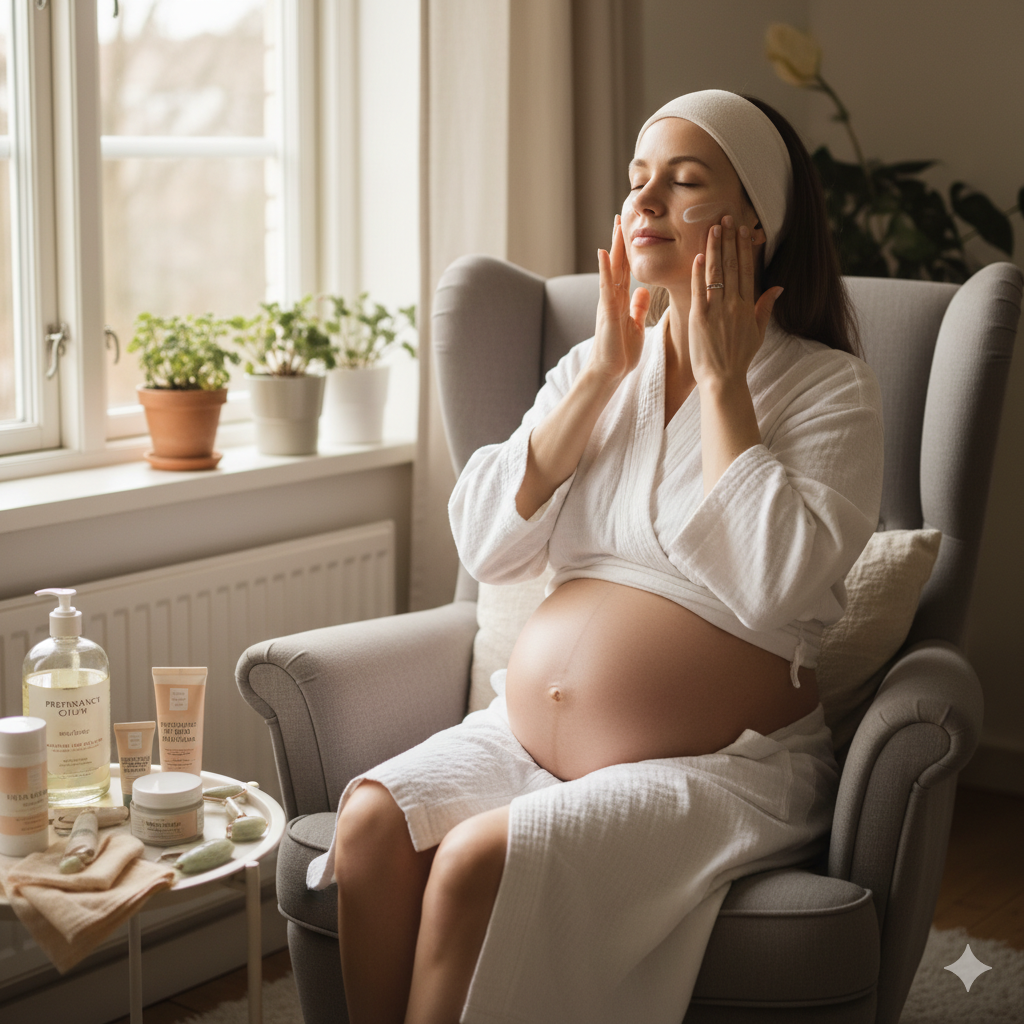
Pregnancy brings incredible changes including for your skin. Hormonal shifts can lead to pigmentation, sensitivity, breakouts and dryness. But with the right skincare routine, you can protect your skin and feel confident throughout this special journey. Dermatologists recommend using gentle actives, avoiding risky ingredients and simplifying your regimen.
Why your skin changes during pregnancy
Hormone fluctuations can trigger melasma (dark patches), oiliness, acne or heightened sensitivity.
Your skin barrier may become weaker; fragrance and strong actives that you used previously may irritate now.
Increased blood volume and water retention can make skin feel puffy or tender.
The foundation of a pregnancy-safe routine
- Gentle cleansing use fragrance-free, non-foaming or low-foam cleansers.
- Hydration + barrier repair ceramides, hyaluronic acid, squalane and peptides help strengthen skin.
- Sun protection daily broad-spectrum SPF is essential to prevent melasma and pigmentation.
Morning routine example
- Cleanser: Gentle, fragrance-free.
- Hydrating serum: Hyaluronic acid or niacinamide.
- Moisturizer: Barrier-repair cream with ceramides.
- Sunscreen: Mineral (zinc oxide/titanium dioxide) preferred.
Optionally, a vitamin C or peptide serum for brightening and protection.
Evening routine example
- Cleanser: Same gentle one or a smoothing balm-cleanser.
- Treatment serum (if needed): Azelaic acid (for pigmentation or mild acne) is considered safe.
- Moisturizer: Richer barrier-repair cream or oil-based product.
- Optional: Gentle eye cream or lip balm.
What ingredients to use
- Niacinamide (for redness, pigmentation)
- Azelaic acid (for mild acne, pigmentation)
- Ceramides, hyaluronic acid (for barrier & hydration)
- Vitamin C (for brightening, though check concentration)
- Squalane, peptides (for nourishment)
What to avoid during pregnancy
- Retinoids (retinol, tretinoin, adapalene) high risk for fetal development.
- High-strength salicylic acid (especially >2%) or aggressive chemical peels.
- Hydroquinone (high absorption rate)
- Strong essential oils, artificial fragrances, phthalates, certain chemical sunscreens (like oxybenzone) potential hormone disruptors.
Myths vs. Reality
- Natural means safe.” Not always some essential oils or botanical actives can irritate or disrupt.
- Avoid all chemicals.” Many dermatologist-approved ingredients are safe when used properly.
- Expensive = better.” Cost does not guarantee safety. Simplicity often wins.
Quick tips for pregnancy skincare success
- Do a patch test before applying anything new.
- Ask your dermatologist when in doubt especially for pigmentation or persistent acne.
- Keep your routine consistent rather than trying one product after another.
- Support your skin from within: hydrate, eat nutrient-rich foods, sleep well and manage stress.
Final thoughts
- Pregnancy doesn’t mean you have to stop caring for your skin it means you should care differently. Choose gentle ingredients, skip the harsh actives, and build a routine that nurtures both your skin and your baby. With the right approach, you can maintain your glow with confidence.